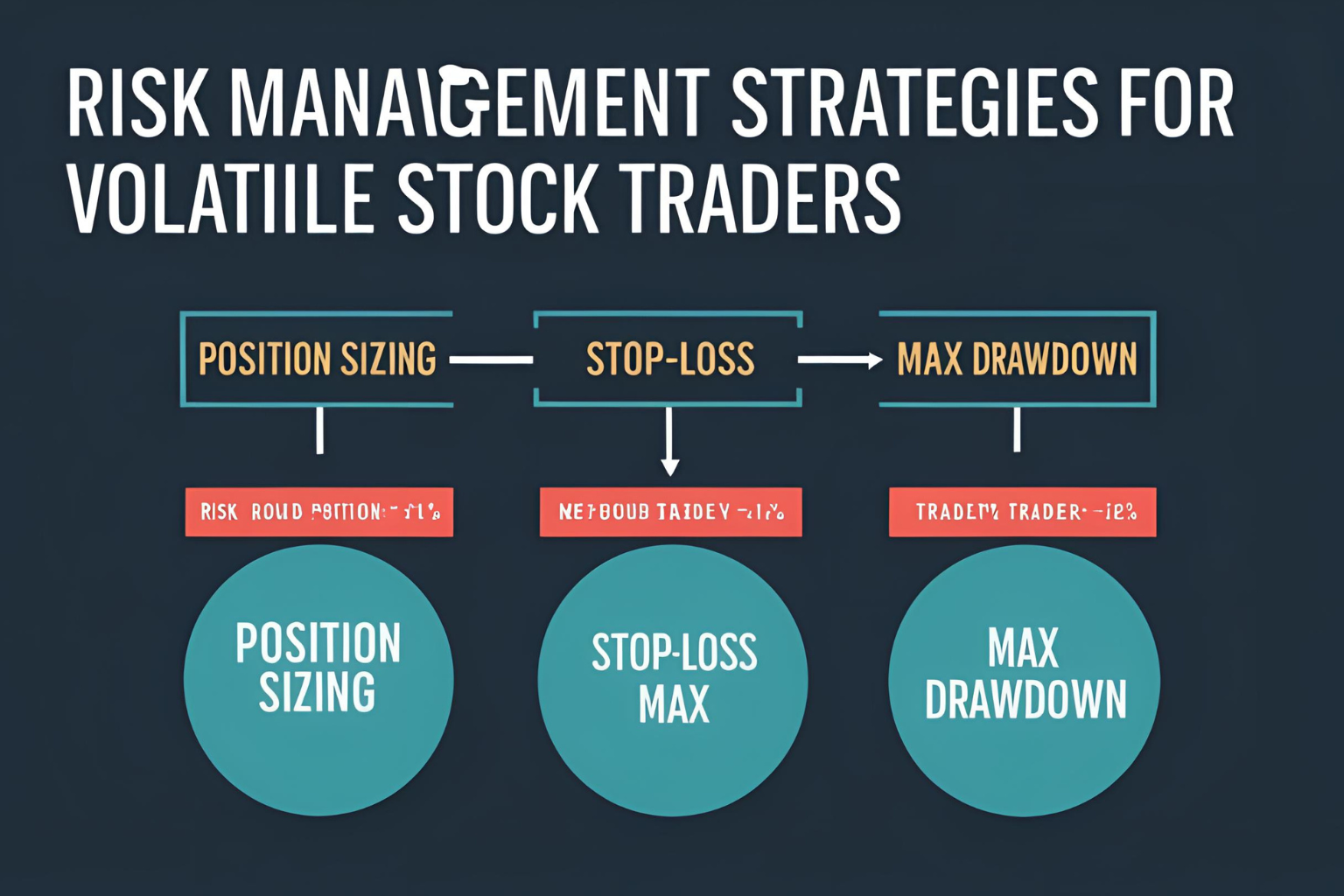
Risk Management Strategies for Volatile Stock Traders
Volatile stocks can deliver fast profits—but also fast losses if you’re not prepared. Whether you’re day trading, swing trading, or scalping high-volatility names, your success depends less on picking the perfect stock and more on managing risk effectively.
In this guide, we’ll walk through the essential risk management strategies for trading volatile stocks, helping you trade with confidence, consistency, and control.
Why Risk Management Matters More in Volatile Stocks
High-volatility stocks can move 5–20% in minutes. While this creates opportunity, it also:
- Amplifies losses from poor entries
- Tests emotional control
- Punishes oversizing and hesitation
Good risk management = survival + long-term growth. It’s what separates professional traders from gamblers.
1. Define Maximum Account Risk Per Trade
Always know the most you’re willing to lose per trade:
- Common guideline: Risk 1%–2% of your total account
- If your account is $10,000, max risk = $100–200
This helps prevent one bad trade from ruining your month.
2. Use Stop-Loss Orders Strategically
Volatile stocks can drop hard and fast. Always set a stop-loss based on:
- Support/resistance zones
- Technical invalidation (e.g., below VWAP or recent low)
- ATR-based buffer (e.g., 1.5× ATR)
Never average down a losing trade.
3. Size Positions According to Volatility
The more volatile the stock, the smaller your size should be.
Use this formula:Position size = Max Risk / (Entry Price – Stop Price)
This lets you adjust sizing to keep your dollar loss constant.
4. Avoid Trading Without a Plan
A trade plan should include:
- Entry level
- Stop-loss level
- Target(s)
- Reason for trade (pattern, catalyst, setup)
If you can’t write it down in 30 seconds, don’t take the trade.
5. Take Partial Profits to Lock in Gains
In fast-moving stocks:
- Sell part of your position at 1R or 2R profit
- Move stop to breakeven or trail below key levels
This reduces pressure and lets you ride the trend with less risk.
6. Control Emotional Risk
Trading volatile stocks is mentally taxing. Manage your psychology by:
- Avoiding revenge trades after losses
- Taking scheduled breaks
- Limiting trades per day to prevent overtrading
- Journaling to spot emotional triggers
7. Avoid Holding Volatile Stocks Overnight (Unless Planned)
Overnight holds expose you to:
- Earnings reports
- News gaps
- Dilution or offerings (especially in penny stocks)
Only swing volatile stocks if you’ve analyzed the setup and sized down.
8. Use Volatility Filters to Select Safer Setups
Trade stocks that:
- Have liquidity (1M+ volume)
- Show clean trends and breakout levels
- Move with volume and not just hype
Avoid illiquid, choppy, or manipulated low-float names unless you’re highly experienced.
9. Set a Daily Loss Limit
Create a rule like:
“If I lose more than 3% of my account or have 3 losing trades in a row, I stop for the day.”
Protecting your mental capital is as important as your financial capital.
Quick Checklist: Volatile Stock Risk Management
| Risk Rule | Follow This |
|---|---|
| Max Account Risk/Trade | 1–2% |
| Always Use Stop-Loss? | Yes |
| Position Sizing Formula | Based on risk per share |
| Profit-Taking | Scale out at 1R or 2R |
| Daily Loss Cap | Set a strict dollar or % limit |
| Overnight Holding? | Only with plan and reduced size |
FAQs
What happens if I don’t use stop-losses?
You risk massive drawdowns. In volatile stocks, a 10–20% drop can happen in minutes.
Is it okay to use mental stops instead?
Only if you’re disciplined and experienced. Beginners should always use hard stops.
What tools help manage risk?
Position size calculators, trading journals, ATR indicators, and trade planning templates.
How do I manage risk in penny stocks?
Trade small, use tight stops, and never hold overnight unless the setup is clean and news-based.
Can I still grow my account with small position sizes?
Yes—slow and steady growth with low drawdown beats high-risk gambling every time.


