How to Trade High Volatility Stocks (Beginner’s Guide)
High-volatility stocks can make large price swings in minutes or hours—creating both massive opportunity and risk. For beginners, these stocks may seem intimidating, but with the right strategy and mindset, they can be traded successfully.
This guide will show you how to trade high-volatility stocks, what to look for, and how to protect your capital while taking advantage of big price movements.
What Are High-Volatility Stocks?
High-volatility stocks are shares that move significantly in a short amount of time, often by 4%–20% in a day. These moves are usually driven by:
- Earnings reports
- Breaking news or rumors
- Sector momentum
- Low float or retail speculation
Such stocks can move fast and far—but not always in predictable directions.
Why Traders Love Volatile Stocks
- Bigger price swings = more profit potential per trade
- More trading opportunities during the day
- Clear momentum patterns (breakouts, reversals, flags)
- Fast feedback for learning through practice
But remember: what moves quickly up can also drop just as fast.
Step-by-Step Guide to Trading High Volatility Stocks
1. Use a Volatility Scanner
Start by identifying which stocks are volatile today using:
- % change > 5%
- Unusual volume (2x or more of average)
- Pre-market or intraday gappers
Free tools: Finviz, Webull, TradingView
Paid tools: Benzinga Pro, Trade Ideas, Market Chameleon
2. Understand the Catalyst
Always ask: Why is this stock moving?
Check:
- Earnings results
- Analyst upgrades/downgrades
- Company news (M&A, FDA, product launches)
- Social media or Reddit momentum
Tip: Avoid trading a stock if you don’t understand what’s driving it.
3. Choose the Right Chart Timeframe
For volatile stocks:
- Use 1-min or 5-min charts for entries and exits
- Use 15-min or hourly charts for setup confirmation
VWAP, moving averages, and volume spikes are your best tools for intraday trends.
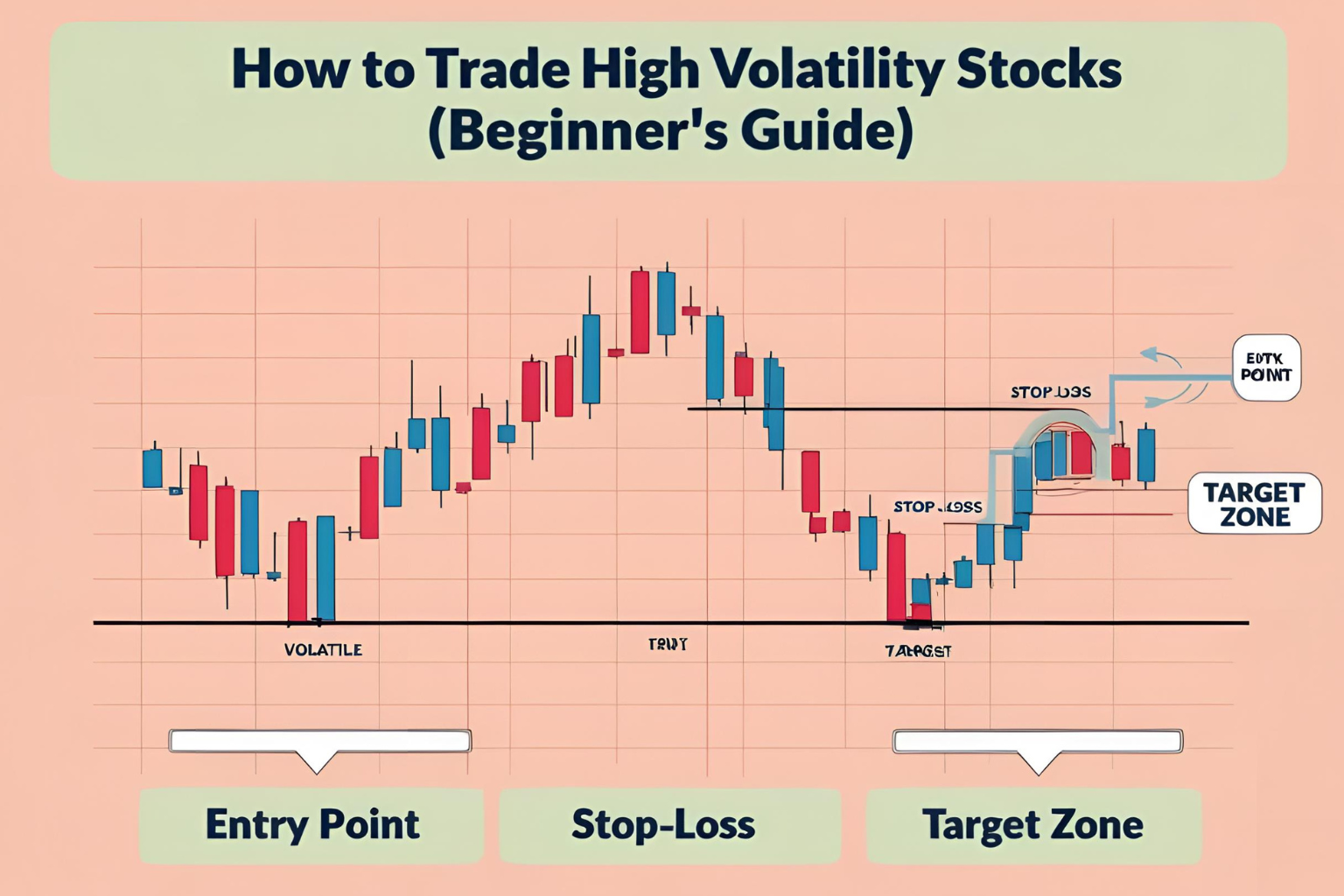
4. Set Entry and Exit Rules
Before entering:
- Define your entry level (support break, flag breakout, etc.)
- Place a stop-loss (use technical level or ATR-based stop)
- Set profit targets (1:2 or 1:3 risk/reward ratio)
Avoid chasing price—always enter near a setup zone, not after a big candle.
5. Manage Position Size Carefully
Volatile stocks require smaller position sizes because:
- They move faster
- They have wider ranges
- A wrong-sized trade can wipe out your account quickly
Rule of thumb: Risk only 1–2% of your total account per trade.
6. Use Stop-Losses Religiously
Volatile stocks can:
- Reverse in seconds
- Trigger emotional exits
- Gap against you after halts or news
Use hard stops or mental stops and don’t cancel them mid-trade.
7. Avoid Holding Overnight (Unless Planned)
Many volatile stocks drop after the news fades. If you’re swing trading:
- Plan it ahead
- Size smaller
- Be aware of earnings or news events
Example Trade Scenario
Stock: ABC
News: Earnings beat
Entry: Break above $8.50 with volume
Stop-loss: $8.10
Target: $9.80 (based on prior resistance)
Outcome:
The stock hits $10.20 intraday before pulling back. You exit with a solid gain after trailing the stop.
Common Mistakes to Avoid
- Chasing big green candles
- Oversizing your trade
- Ignoring news or catalyst
- Trading without a stop-loss
- Letting emotions override your plan
FAQs
Is trading volatile stocks only for professionals?
No, but beginners must start small and use strict rules.
How can I find these stocks daily?
Use scanners on Finviz, TradingView, or your brokerage platform pre-market and after open.
What’s the best time to trade volatile stocks?
The first 30–90 minutes after market open often show the biggest moves.
Should I use market or limit orders?
Use limit orders to avoid slippage. Market orders in volatile names can fill badly.
What indicators work best?
VWAP, RSI, ATR, and volume-based signals are most reliable for intraday volatility.


